
Soffits and fascia are two roof-edge components that protect a home from weather while helping the attic and roof system function properly. Although they are easy to overlook from the ground, damaged or poorly ventilated soffits and fascia can contribute to moisture problems, pest entry, and premature roof deterioration.
What are soffits and fascia?
Soffits are the horizontal panels installed beneath the roof overhang. Looking up from outside, they form the underside of the eaves. Soffits may be made from aluminum, vinyl, wood, or other exterior materials.
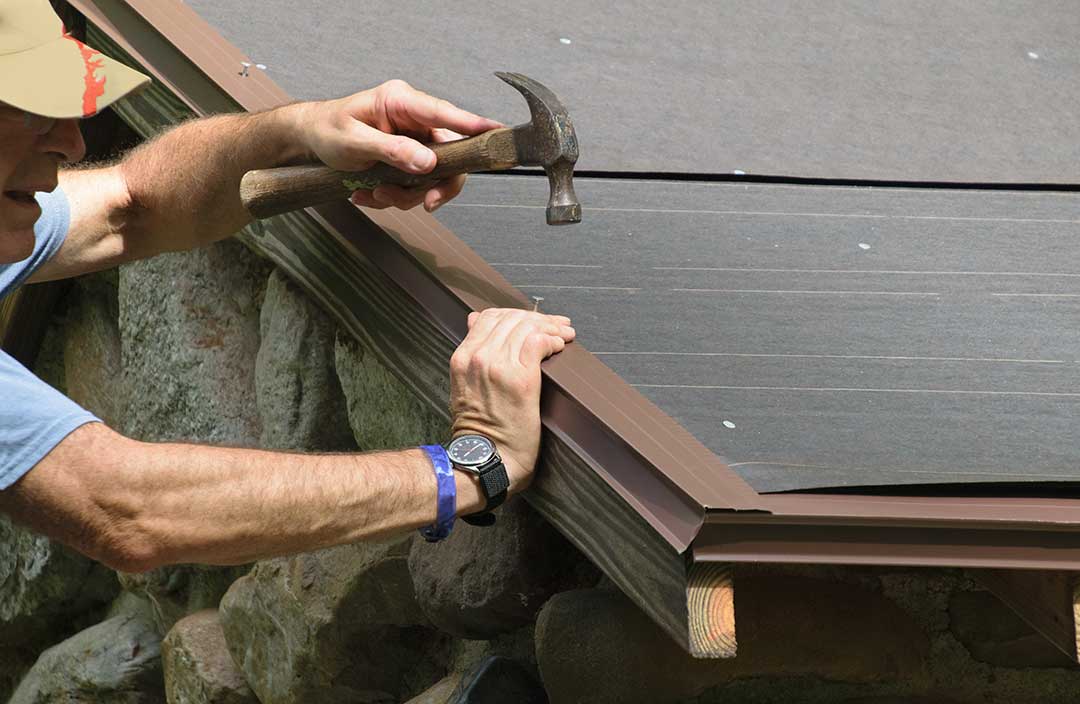
Fascia is the vertical or slightly angled trim board along the lower edge of the roof. Gutters are commonly attached to the fascia, which means this part of the roof edge must be strong enough to support the gutter system and withstand repeated wetting, freezing, and thawing.
Together, these components create a transition between the roof, attic, exterior walls, and gutter system.
What does the soffit do?
The primary job of a soffit is to protect the underside of the roof overhang while allowing controlled airflow into the attic. Vented soffits contain small openings or perforations that let outside air enter near the eaves.
That incoming air supports a continuous ventilation path when warm air exits through higher roof vents. Proper airflow can help:
- Reduce excessive attic heat during warm weather
- Limit condensation during cold weather
- Help keep roof sheathing and insulation drier
- Reduce conditions that support mold or wood decay
- Improve the performance of some insulation systems
A soffit is not automatically a ventilation system simply because it has openings. Airflow can be blocked by insulation, paint, debris, insect nests, or poorly installed components. In some homes, the roof design may also limit how effectively air moves from the eaves to the upper attic.
What does the fascia do?
Fascia provides a finished edge at the roofline and helps shield the roof structure from rain and snow. It also commonly supports the back edge of the gutters.
In a well-maintained roof system, fascia helps direct water toward the gutters instead of allowing it to run behind the gutter or down the exterior wall. If the fascia becomes soft, warped, or detached, the gutter may begin to pull away from the house or slope incorrectly.
Fascia can be damaged by:
- Persistent exposure to water
- Overflowing or clogged gutters
- Ice buildup and snow sliding from the roof
- Inadequate flashing
- Failing roof edges
- Wood-boring insects or carpenter ants
- Repeated freeze-thaw movement
In older homes, painted wood fascia may require periodic maintenance even when the roof covering itself appears to be in acceptable condition.
Why do soffits and fascia matter in Manlius, NY?
Local homes experience weather patterns that place regular stress on roof edges. Snow accumulation, ice formation, spring rainfall, summer humidity, and autumn debris can all affect soffits, fascia, and gutters.
Freeze-thaw cycles are especially significant. Water can enter a small crack or unsealed joint, freeze, expand, and gradually enlarge the damaged area. Repeated cycles may cause paint to peel, wood to split, fasteners to loosen, or panels to buckle.
Snow and ice can also place extra weight on gutters attached to fascia. If the gutter system overflows during a thaw, water may repeatedly wet the fascia and the roof edge. This can create decay that is not visible from the ground.
Homes with mature trees may face additional maintenance needs because leaves, needles, and small branches can block gutters or cover soffit openings. Good roof-edge performance depends on the connected system rather than on any single component.
How can a homeowner recognize soffit or fascia problems?
Some warning signs are easy to see, while others appear only after closer inspection. Look for:
- Peeling or blistered paint along the roof edge
- Brown, dark, or soft areas on wood fascia
- Sagging or separating gutters
- Water stains beneath the eaves
- Cracked, loose, or missing soffit panels
- Evidence of birds, squirrels, wasps, or insects entering the attic
- Daylight visible through areas that should be enclosed
- Mold-like staining or a musty attic odor
- Icicles forming repeatedly in the same roof-edge locations
- Damp insulation near the exterior walls
A damaged soffit does not always mean the soffit caused the problem. Roof leaks, gutter overflow, attic condensation, and inadequate flashing may all send water toward the same area. Repairing only the visible panel may leave the underlying source unresolved.
Are soffit vents the same as attic ventilation?
No. Soffit vents are intake openings, not a complete attic ventilation system. They work as part of a larger arrangement that may include ridge, gable, or roof-mounted exhaust ventilation.
Ventilation should be balanced. If exhaust openings are added without sufficient intake air, the attic may not receive the intended airflow. If insulation blocks the soffit area, the vent may be present but ineffective.
Powered attic fans also do not automatically solve ventilation problems. Depending on the building design, a fan may pull air from unintended locations, including gaps around ceiling fixtures or access panels. The condition of the insulation air barrier and the placement of intake and exhaust openings both matter.
Can soffits and fascia be repaired, or do they need replacement?
Minor damage can sometimes be repaired, but the correct approach depends on the material and the extent of the problem. A small section of loose aluminum or vinyl soffit may be resecured or replaced. Wood fascia with limited surface deterioration may be cleaned, dried, repaired, and repainted if the underlying wood remains sound.
Replacement is more likely when the material is:
- Soft or crumbling
- Warped beyond its original shape
- Repeatedly wet
- Structurally unable to hold gutter fasteners
- Infested or extensively deteriorated
- Damaged across multiple connected sections
Before replacing roof-edge materials, the source of moisture should be identified. Possible causes include a leaking roof edge, missing drip edge, failed flashing, overflowing gutters, ice-related movement, or attic condensation.
What maintenance helps protect these components?
Routine roof-edge maintenance is usually simple but should be consistent. Keep gutters and downspouts clear enough to carry water away from the eaves, especially after autumn leaf drop and major storms. Check that downspouts discharge water away from the foundation rather than allowing it to collect beneath the roof edge.
From the ground, inspect for sagging gutters, detached panels, staining, and visible gaps. Do not climb onto a roof or use a ladder near icy conditions, unstable ground, or overhead hazards. Roof-edge work can involve fall risks, sharp metal, hidden decay, and electrical service lines, so hazardous conditions may require qualified assistance.
Inside the attic, look for damp insulation, water marks, blocked soffit openings, and signs of animal entry. Attic observations can help distinguish a roof leak from a ventilation or condensation issue.
A common misconception: soffits are only decorative
Soffits and fascia do provide visual finishing at the roofline, but their function is not merely cosmetic. The soffit helps protect the eaves and may provide essential intake ventilation. The fascia helps protect the roof edge and often carries the gutter system.
A home can have an attractive exterior while still having concealed deterioration behind painted or covered materials. Regular observation of the roof edge, gutters, attic, and exterior walls gives homeowners a better chance of finding moisture problems before they spread into framing, insulation, or interior finishes.
